
Mercari has become a fixture in the U.S. resale economy, known for its mobile-first design, ease of listings, and prepaid shipping via FedEx and USPS. Launched in Japan in 2013 and brought to the U.S. just a year later, Mercari now reports more than 23 million monthly active users as of fiscal year 2025 (Mercari IR).
So, is Mercari legit? Yes. But like any third-party marketplace, low barriers to entry make it an easy target for counterfeiters. From fake sneakers and designer bags to electronics and skincare, infringers are increasingly using Mercari to pass off unauthorized goods as the real thing.
Wondering how to report someone on Mercari for selling fakes? This guide explains the risks of resale market counterfeit activity and how to take action against it quickly and effectively.
TLDR:
- Mercari's 23 million monthly active users make it a high-volume counterfeit surface for sneakers, designer goods, electronics, and skincare.
- Spot fake listings by flagging new seller profiles with no badges, blurry images, vague descriptions, and prices that undercut market rate.
- Report counterfeits by tapping the flag icon on a listing, selecting the IP violation category, and attaching product comparisons, trademark links, and seller screenshots.
- Mercari only accepts reports on individual listings, not seller accounts, which lets repeat offenders relist under new profiles within hours.
- MarqVision automates detection and takedown across Mercari and 1,600+ marketplaces, replacing listing-by-listing complaint work with bulk enforcement.
What Is Mercari, and Why Has It Become a Counterfeit Hotspot?
Mercari is a peer-to-peer marketplace where users buy and sell everything from vintage apparel to home appliances. Unlike marketplaces with stricter onboarding or product review processes, Mercari allows nearly anyone to list and ship items in minutes.
While Mercari's convenience has helped it grow rapidly, that same convenience opens the door to counterfeiting and IP abuse. Global trade in counterfeit goods reached an estimated $467 billion in 2021, per the OECD counterfeit goods trade report, and peer-to-peer resale markets have since given infringers new surfaces to exploit. Sellers can upload misleading photos, list fake products, or send used, damaged, or items that bear no resemblance to the listing. In some cases, bad actors even mimic Mercari's interface to conduct phishing scams, sending fake "verification" links that steal login credentials or financial data.
What Brand Teams Should Know About Buyer Protection Gaps
Mercari's buyer protection rules create specific blind spots that matter for IP enforcement. These gaps slow how quickly counterfeit activity gets flagged and reduce the enforcement pressure bad actors actually face.
- Complaints close once feedback is submitted: Once a buyer rates the seller, the transaction is considered closed, even when the item is counterfeit. This means many fake sales go unreported, making it harder for brand teams to track infringement volume.
- Buyers have only 3 days to report after delivery: After that window, Mercari typically won't approve refund requests. Short reporting windows cut off the data brands need to identify patterns and build cases against repeat offenders.
- Off-platform payments bypass protection entirely: Sellers who request payment through apps like Venmo or Zelle fall outside Mercari's system and any enforcement mechanism, making those transactions invisible to brand monitoring.
For brand teams, these gaps mean consumer complaints alone won't expose the full scope of counterfeit activity on Mercari. Proactive detection is the more reliable path.
How to Identify a Suspicious Seller
Not every suspicious listing is obviously fraudulent, but there are common red flags. Encourage your brand teams, partners, or customers to watch for:
- Incomplete or brand-new seller profiles
- Listings that use blurry or generic catalog images
- Vague or overly broad product descriptions (“black handbag” instead of Chanel)
- Dramatically low prices for high-value items
- A lack of seller response in the comment section
- Verified buyer comments flagged as “under review” or deleted
Mercari also assigns performance-based badges to help buyers identify trustworthy sellers. A verified profile, earned by verifying email address, phone number, and government-issued ID, signals a baseline level of legitimacy.

Additional badges like "Fast Responder", which indicates replies within 12 hours, and "Quick Shipper", awarded to those who ship orders within 24 hours, further reflect seller trustworthiness. The "Reliable Seller" badge, given to users who rarely cancel transactions or receive complaints, is another positive sign. If a seller lacks these indicators, treat their listings as high-risk. Bad actors routinely skip verification and cycle through new profiles to stay ahead of detection.

How to Report a Seller on Mercari
If your brand identifies a counterfeit listing, Mercari provides a simple way to report it:
- Tap the listing thumbnail to open the product page.
- Tap the flag icon in the top right corner.
- Choose the report reason related to counterfeiting or intellectual property violations.
- Use the description field to provide detailed information, such as:
- Product comparison to an authentic item
- Links to your trademark or product catalog
- Screenshots of the seller’s profile or suspicious messaging
- The more detailed, the better.
- Submit and confirm.
Mercari only allows users to report individual listings, not full seller profiles, which is an important limitation for brands tracking repeat offenders.
When Reporting Alone Isn’t Enough
Mercari does take action on intellectual property reports, but for brands facing high volumes of infringement, the marketplace's case-by-case process can quickly become a bottleneck. Response times vary considerably: some listings are removed within days, while others may take weeks depending on complexity and report volume.
What's more, the reporting process requires brands to gather evidence, draft detailed descriptions, and follow up on each individual listing. For teams monitoring dozens or even hundreds of infringing posts, this approach is time-consuming and hard to maintain. And as counterfeiters grow more sophisticated, switching accounts, using deceptive product names, and subtly altering images, reactive enforcement can't keep pace.
That’s where MarqVision comes in.
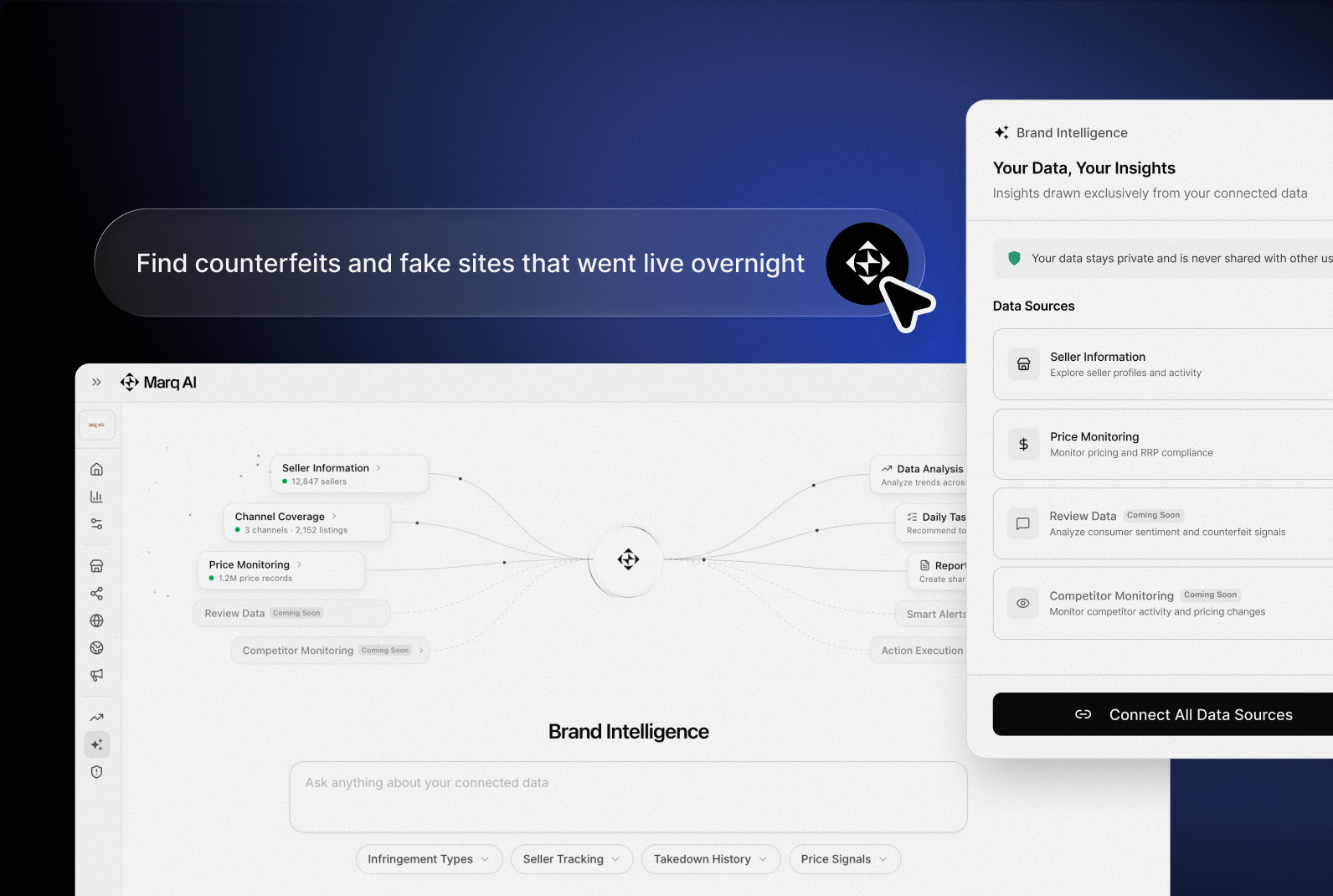
Our AI-powered solution automates the detection and takedown of counterfeit listings across Mercari and more than 1,600 global marketplaces. We flag violations ranging from trademark misuse to design infringement and give brands the tools to take bulk action with just a few clicks.
Instead of spending hours chasing down individual violations, MarqVision empowers brand teams to scale their enforcement, protect IP more efficiently, and stay ahead of evolving counterfeit threats, without compromising on speed or accuracy.
Final Takeaway: Is Mercari a Legitimate Marketplace?
Yes: Mercari is a legitimate and popular resale marketplace, used by millions across the U.S. For IP holders, though, legitimacy alone doesn’t equal safety. As counterfeiters grow more creative and platforms expand, brand protection must evolve with them.
Whether you're responding to consumer complaints, planning out an enforcement strategy, or wondering how to report a repeat counterfeiter on Mercari, the bottom line is clear: brand protection demands automation, speed, and scale.
Get started with brand protection: Book your MarqVision demo now.
FAQ
How do you spot a fake listing on Mercari before reporting it?
Look for blurry or generic catalog images, vague product descriptions ("black handbag" instead of a named brand), dramatically low prices on high-value items, and brand-new seller profiles with no badges or buyer feedback. Sellers running counterfeit operations tend to avoid verification steps and cycle through fresh accounts frequently, so the absence of Mercari's "Reliable Seller," "Fast Responder," or "Quick Shipper" badges is a meaningful signal worth acting on.
What's the difference between reporting a fake on Mercari yourself vs. using an automated brand protection solution?
Manual reporting through Mercari works listing by listing: you gather evidence, write a description, and submit through the flag icon for each individual post. That process breaks down fast when you're tracking dozens or hundreds of infringing listings from repeat offenders who rotate accounts and alter product names to evade detection. Automated brand protection tools like MarqVision scan across Mercari and 1,600+ other marketplaces simultaneously, flag violations in bulk, and take action without requiring your team to rebuild the evidentiary case from scratch each time.
How do I report counterfeit listings on Mercari?
Open the product page, tap the flag icon in the top right corner, select the counterfeit or IP violation category, and include detailed supporting evidence: product comparisons to authentic items, trademark or catalog links, and screenshots of suspicious seller behavior. The more documentation you attach, the stronger the report. Note that Mercari only accepts reports on individual listings, not full seller profiles, which creates a gap for brands tracking high-volume or repeat offenders.
Should I use Mercari's built-in reporting system or a third-party enforcement tool for brand protection?
Mercari's reporting system is a reasonable starting point for isolated, low-volume cases where you have time to build each complaint manually. Once counterfeit activity scales or the same sellers keep relisting under new profiles, case-by-case reporting becomes a bottleneck: response times vary from days to weeks, and there's no mechanism to action a seller's full account. Third-party enforcement tools are better suited to ongoing programs where detection speed, bulk action, and cross-platform coverage matter more than individual complaint resolution.
Why do counterfeit sellers keep reappearing on Mercari after their listings are removed?
Mercari's low barrier to entry means a removed seller can create a new profile and relist within hours. Without operator-level targeting that traces listings back to the same bad actor across accounts, each takedown covers one listing while the underlying seller stays active. Enforcement that tracks behavioral patterns, pricing signals, and account clustering across a seller network is what separates a one-time removal from a lasting reduction in counterfeit activity.
Stay up to date on the latest IP Protection content from MarqVision.




4 Enforcements a Week to 400: Scale Brand Safety with Marq AI

Don’t Just Find Counterfeits. Dismantle the Entire Network.

.png)
Discover the latest trends and challenges in IP protection

Take Control of Your Trademarks with MARQ Folio
Renew and Manage Your Trademarks Easily With MARQ Folio

We’re waiting to hear from you

See the best brand protection solution in action

Don’t let piracy steal your growth

Talk to us about your brand protection problems